

Primary health care, as defined by WHO, is a whole-of-society approach to organise and strengthen health systems to bring services for health and wellbeing closer to communities. In addition to ensuring access to health services, it addresses the broader determinants of health through multisectoral action, and promotes the empowerment of individuals and communities.
In December 2021, the four main international agencies (WHO-human health, FAO-food, WOAH-animal health, UNEP-environment) converged on a consensus definition of One Health as an integrated and unifying approach, recognising that the health of humans, animals, plants and the environment (including ecosystems, i.e., their inter-relationships) are closely linked and interdependent. Hence, One Health is a trans-disciplinary, systems approach.
A legitimate question is how to apply the One Health approach–which might seem more of a conceptual work-in-progress–to the practice of Primary Health Care. The key words here can be complexity and systems. By broadening the scope and promoting a multidisciplinary perspective, One Health can help Primay Health Care practitioners understand the consequences and sustainability of Primary Health Care in action. Let’s consider a few examples.
1. Vector-borne infectious diseases
Mosquitoes and other blood-sucking insects are vectors of serious infectious diseases such as malaria to dengue fever, Zika virus infection, etc. Primary Health Care understandably wishes to fight such insects in order to prevent or reduce the risk of infection.
That being said, One Health helps us to properly evaluate some additional aspects of this problem that should be considered. Mosquitoes are not just “vectors”. They are animal species in their ecosystems. In order to effectively reduce the risk of disease, we need to understand these animals, i.e., their habits, preferred habitat, life cycle, and interactions with other species. This understanding will then allow us to control these insects in a safe and sustainable way, minimizing undesired long-term impacts on humans, food and water sources, and ecosystems. It would be short-sighted and counterproductive, for instance, to reduce the populations of vector insects by means of an insecticide treatment that similarly harms pollinators.
2. Drinking water
Drinking water is a priority requirement for health, and ensuring a clean water supply is a major Primary Health Care intervention. However, digging wells in order to obtain drinking/household water is necessary but not sufficient. Water is not just something coming out of a pipe. It springs out of the ground. Therefore, soil geology and geochemistry should be carefully considered so as to minimise long-term health risks to communities. The widespread contamination of drinking water with high arsenic levels in Bangladesh is a telling example.
3. The use of antibiotics in animal farming
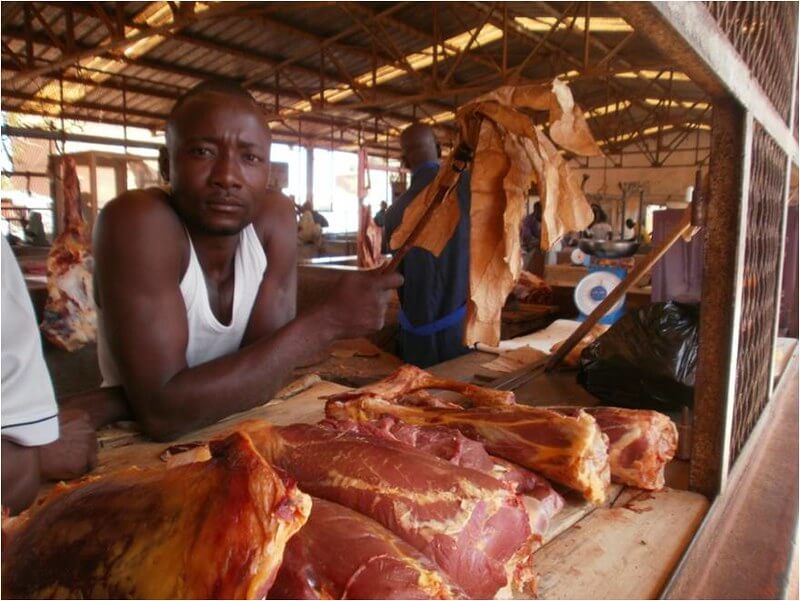
Antibiotic treatments in animal farming reduce the risk of zoonoses, improve animal health, and therefore support both human nutrition (providing animal proteins and fats) and the welfare of communities (thriving farming and activities related to animal products). Thus, ensuring the availability and affordability of veterinary antibiotics can be considered an important role of Primary Health Care.
Meanwhile, overuse and misuse of antibiotics increase the selective pressure toward antimicrobial resistance, which is a global health threat. In this context, the negative impact on human health can be reduced by limiting veterinary antibiotics to classes of antimicrobials that are not of critical importance in the treatment of humans. In addition, environmental considerations are crucial and should be taken into account. Animal excreta can carry antibiotic residues and antibiotic-resistant bacteria as well as antibiotic resistance genes into sludges, effluent waters, and fertilisers, hence exposing the agri-food chains and water bodies. These are risks that can severely jeopardise the sustainability of the use of antibiotics in animal farming.
Conclusion
To summarise, for public health interventions to yield their utmost benefits, their potential long-term effects should be considered in terms of human health, of course, but also in terms of animal health and ecosystem health, as they are all closely linked and interconnected. The transdisciplinary, systems approach of One Health assesses the connections of Primary Health Care with other fields and allows practitioners to better aim and tailor interventions and, ultimately, to improve their safety and efficacy. As others have pointed out, “there is no health without One Health”.

