
Formative research is the process by which researchers aim to understand the characteristics (e.g., current behaviors, perceptions, needs) of target groups that influence their decisions and actions. Formative research is needed to design context-specific school nutrition and hygiene education programmes.
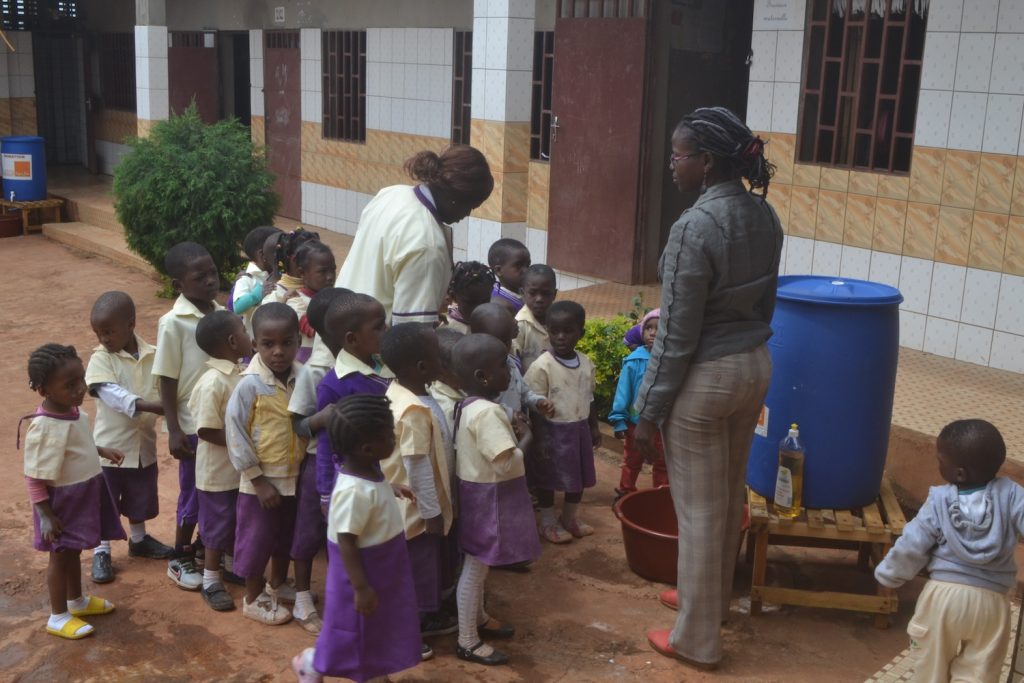
With our pilot studies we started developing modules for combined education modules for schoolchildren on i) nutrition knowledge, attitudes, practices; ii) food groups, food hygiene, nutrient sources, balanced diet based on local foods; iii) dental care and handwashing. We also developed indicators to measure the impact over time.
We highlighted how preventive medicine is a balance of awareness and affordability. Indeed, the availability/donation of WASH equipment and materials for hand and teeth hygiene facilitated and motivated the proactivity of the school community towards good nutrition and hygiene practices on a daily basis. School nutrition education can effectively improve nutrition skill if related social determinants are understood.
Since most eating habits are formed early in life, with beliefs and tacit knowledge directing eating behaviors, we started exploring the impact of sensitisation and demonstration activities for the parents/caregivers and the school staff. Concrete practices to preserve local recipes (e.g. Egusi Okra soup) from risk factors, identify points of particular attention during meal preparation -starting from the selection of raw ingredients, through to handling, cooking, storage, and consumption- were explored. Since nutritional interventions benefit from the integration of “kitchen toxicology” practices in everyday life, we gave example, e.g., of cheap ingredients with illegal or undesirable residues, substances arising in poorly stored commodities (e.g., mycotoxins, histamine in scombroid fish), metals leaching from cookware, and process contaminants such as PAHs and acrylamide. Based on our findings, we expect that nutritional courses for schoolchildren will benefit from modules to boost the engagement of parents and teachers in the promotion of nutrition-related behaviors conducive to health and well-being.
2023. C Frazzoli, G Grasso, DC Husaini, DN Ajibo, FCe Orish, OE Orisakwe. Immune system and epidemics: the role of African indigenous bioactive substances. Nutrients 15(2):273.
2022. Kimassoum D, Haroun A, Tidjani A, Kanabet Z, Frazzoli C. An exploratory investigation of individual and school-level determinants for effective nutrition education in primary school in N’Djamena, Chad. African Journal of Food Science Research 10(3):001-006.
2022. Fankam PY, Pouokam GB, Saha Foudjo BU, Mazzanti F, Sando JT, Samuel C, Kamda A, Fokou E, Frazzoli C. Combined education course on nutrition, hand-washing and dental care in primary schools in Yaoundé, Cameroon. Journal of Global Health Reports 6:e2022019.
2021. Dike CS, CN Orish, CR Nwokocha, FD Sikoki, BB Babatunde, C Frazzoli, OE Orisakwe. Phytowaste as nutraceuticals in boosting Public health. Clinical Phytoscience 7:24.
2020. Frazzoli C, A Mantovani. Toxicological risk factors in the burden of malnutrition: the case of nutrition (and risk) transition in sub-Saharan Africa. Food and Chemical Toxicology, 146:111789.
2020. Amadi NC, C Frazzoli, OE Orisakwe. Nigerian foods of probiotic potentials and relevance to chronic metal exposure: a systematic review. Environmental Science and Pollution Research 27(16):19285-19297.
2018. Ekhator OC, NA Udowelle, S Igbiri, RN Asomugha, C Frazzoli*, OE Orisakwe, Street foods exacerbate effects of the environmental burden of polycyclic aromatic hydrocarbons (PAHs) in Nigeria. Environmental Science and Pollution Research. 25, 6, 5529–5538.
2017. Frazzoli C, Mazzanti F, Achu MB, Pouokam GB, Fokou E. Elements of kitchen toxicology to exploit the value of traditional (African) recipes: The case of Egusi Okra meal in the diet of HIV+/AIDS subjects. Toxicology Reports 4, 474-483.
2017. Frazzoli C, F Mazzanti, MB Achu, GB Pouokam, E Fokou. Elements of kitchen toxicology to exploit the value of traditional (African) recipes in the diet of HIV+/AIDS subjects: the case of Egusi okra meal. Toxicology Reports. 4, 2017, Pages 474-483.
2015. Proietti I, C. Frazzoli, A. Mantovani. Exploiting nutritional value of staple foods in world’s semi-arid areas: risks and benefits, challenges and opportunities of sorghum. Healthcare, 3, 172-193.
2014. Proietti I, C. Frazzoli, A. Mantovani. Identification and management of toxicological hazards of street foods in developing countries. Food and Chemical Toxicology 63:143–152.
2014. Proietti I, Frazzoli C, Mantovani A. Identification and management of toxicological hazards of street foods in developing countries. Food and Chemical Toxicology 63:143-152.
2013. Frazzoli C. Sustainable food safety: a “consumer safari” in Senegal. Prevention Without Borders, 1:28-37.