
One Health (OH) is the conceptual and operational framework that links environment, ecosystems, and human health. OH is a developing field that deals with the multifaceted web of feed-backs and interactions among its components. In order to avoid “drowning into complexity,” priority issues in the environment and chemical exposures should be identified for risk analysis.
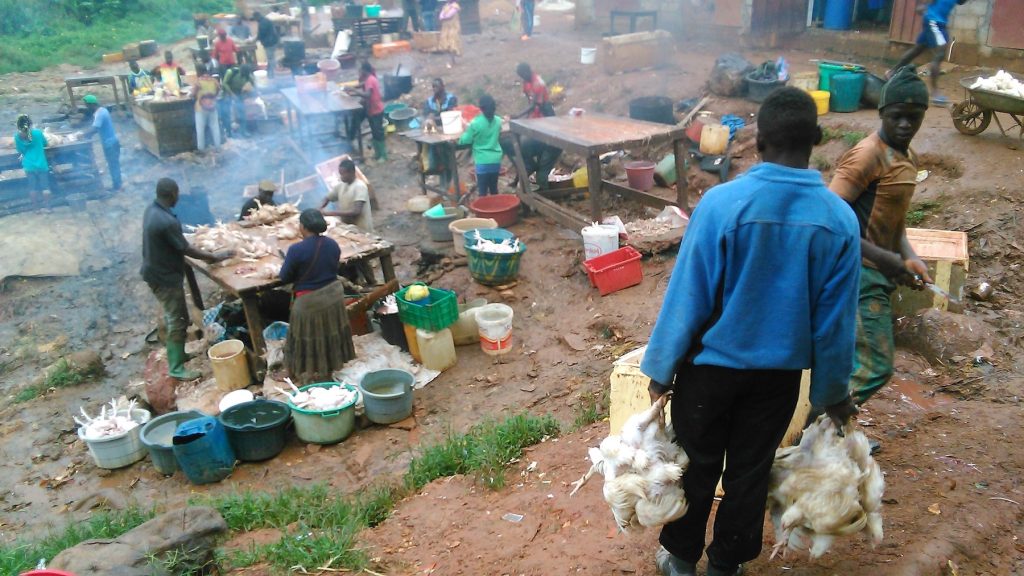
Indeed, OH has been frequently presented as an updated and more comprehensive approach to the infectious agents shared among animals and humans and the related problems, such as antibiotic resistance. Sure, topics like zoonoses feature prominently in the OH scenario which, nevertheless, includes much more environment-and-health problems. Food and environment do interact: environment influences the living organisms that produce human food and, in the meanwhile, food production outputs influence the environmental quality. As for foods of animal origin, feed materials and practices are driving components of the environment-food interactions.
2024. UO Emoyoma; AN Ezejiofor; C Frazzoli; B Bocca; OC Ekhator; AP Onyena; GJ Udom; OE Orisakwe. Polycyclic Aromatic Hydrocarbons in fish (fresh and dried) and Public Health in Nigeria: A Systematic Review. International Journal of Environmental Health Research 1-16. doi: 10.1080/09603123.2023.2230915.
2023. Bouelet NI, C Frazzoli, GB Pouokam, V Colizzi. Occurrence and dietary risk assessment of Mycotoxins in most consumed foods in Cameroon: exploring current data to understand futures challenges. Foods 12(8), 1713.
2022. Okoye EA, Bocca B, Ruggieri F, Ezejiofor AN, Nwaogazie IL, Frazzoli C, Orisakwe OE. Arsenic and toxic metals in meat and fish consumed in Niger delta, Nigeria: employing the margin of exposure approach in human health risk assessment. Food and Chemical Toxicology 159:112767.
2020. Amadi NC, C Frazzoli, OE Orisakwe. Sentinel species for biomonitoring and bio-surveillance of environmental heavy metals in Nigeria. Journal of Environmental Science and Health, Part C, 38(1):21-60.
2019. Amadi CN, S J Offor, C Frazzoli, OE Orisakwe. Natural antidotes and management of metal toxicity in developing nations. Environmental Science and Pollution Research;26(18):18032-18052.
2017. Pouokam G.B, Foudjo BS, Chi S, Fankam Yamgai P, Kamda SA, Taguemkam Sando J, Fankam AG, Frazzoli C. Contaminants in Foods of Animal Origin in Cameroon: A One Health Vision for Risk Management “from Farm to Fork. Frontiers in Public health 5:197.
2017. Ladeira C, C Frazzoli, OE Orisakwe. Engaging One Health for non-communicable diseases in Africa: perspective for mycotoxins. Frontiers in Public health 5:266.
2017. Frazzoli C, P Gherardi, N Saxena, G Belluzzi, A Mantovani. The hotspot for (global) one health in primary food production: Aflatoxin M1 in dairy products. Frontiers in Public health 4:294.
2016. Pouokam GB, H Hamed; R Ngwafor, C Frazzoli. Toxicovigilance systems and practices in Africa. Toxics. 4(3):13.
2015. Frazzoli C, B Bocca, A Mantovani. The one health perspective in trace elements biomonitoring. Journal of Toxicology and Environmental Health, Part B: Critical Reviews;18(7-8):344-70.
2017. Cheng R, Mantovani A, Frazzoli C. Analysis of food safety and security challenges in emerging African food producing areas through a One Health lens: the dairy chains in Mali. Journal of Food protection. 80, 1, 57-67.
2017. Mantovani A, Frazzoli C. Endocrine disrupting chemicals: from feeds to hormones. Open Access Government. Open Access Government 014. Adjacent government UK, profile, May 2017. Adjacent Digital Politics Ltd: Crewe, Cheshire, UK.
2015. Mantovani A, Ferrari D, C Frazzoli C. Sustainability, security and safety in the feed-to-fish chain: focus on toxic contamination. International Journal of Nutrition and Food Sciences 4(2-2): 6-24.
2010. Frazzoli C, Mantovani A. Toxicants exposure as novel zoonoses: reflections on sustainable development, food safety and veterinary public health. Zoonoses and Public Health, 57:e136-e142.
2010. Mantovani A, Frazzoli C. Risk assessment of toxic contaminants in animal feed. CAB Reviews: Perspectives in Agriculture, Veterinary Science, Nutrition and Natural Resources, 5, 046:1-14.
2009. Mantovani A, Frazzoli C, La Rocca C. Risk assessment of endocrine-active compounds in feeds. The Veterinary Journal, 182: 392-401.
2009. Frazzoli C, Petrini C, Mantovani A. Sustainable development and next generation’s health: a long-term perspective about the consequences of today’s activities for food safety. Annali dell’Istituto Superiore di Sanità, 45:65-75.